
Health
Top 10 Most Famous Turmeric Varieties in India

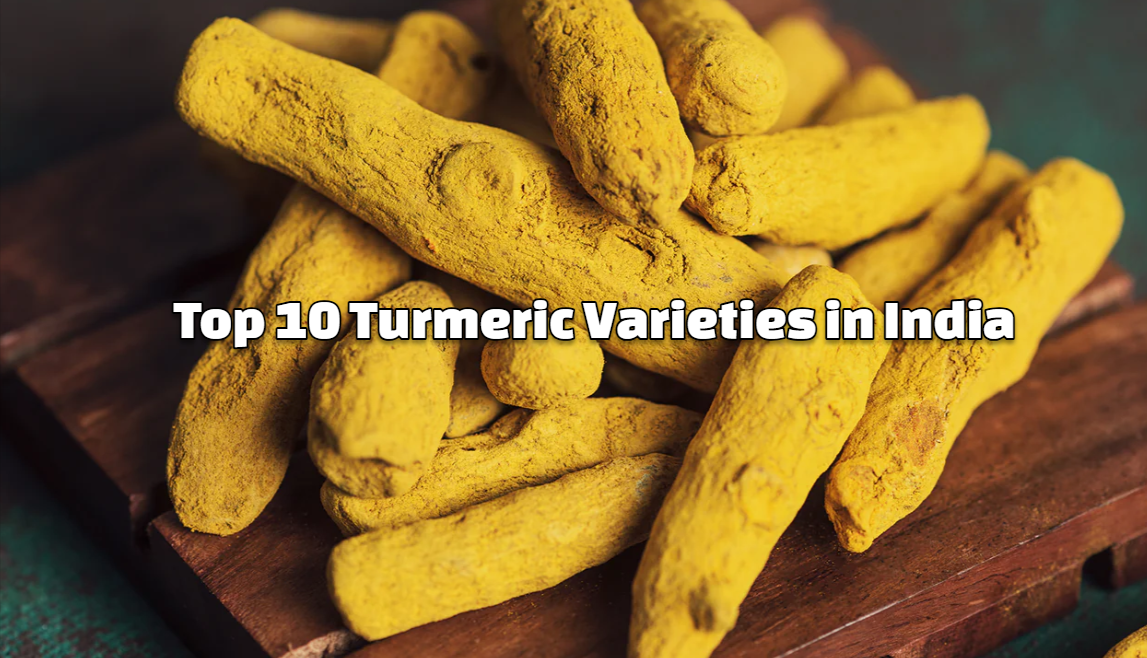
Turmeric is often referred to by the name of “Haldi” in India, is among the most important and widely-grown spices in the world. The spice is revered for its medicinal, culinary and religious significance, turmeric has a place in Indian household life. It is utilized in the cooking process, Ayurvedic medicine, religious rituals, as well as cosmetics. India is the biggest exporter and producer of turmeric worldwide and the majority of cultivation occurs in Telangana, Andhra Pradesh, Maharashtra, Tamil Nadu, Odisha, Karnataka, and Kerala.
Different varieties of turmeric are grown throughout India with each variety varying in curcumin amount and yield, as well as rhizome size and the color. Curcumin, the most bioactive component, is the key to determining the medicinal and commercial benefits of turmeric.
This article focuses on the most popular varieties of turmeric grown in India as well as their specific characteristics, areas where they can be grown, and applications.
1. Lakadong
Lakadong turmeric is regarded as one of the finest variety of turmeric in India because of its high content of curcumin as well as outstanding quality.
- Curcumin Content: 6-8 % (very high)
- Rhizome Color: Bright yellow
- Regions: Meghalaya (Jaintia Hills)
- Characteristics:
- A high medicinal value because of the curcumin’s high content
- Colorful and intense aroma
- Uses: Medicinal applications food supplements, health benefits
2. Rajapuri
Rajapuri is an extensively grown type of turmeric in Maharashtra as well renowned for its huge rhizomes and an excellent yield.
- Curcumin Content: 2.5-3%
- Rhizome Color: Deep yellow
- Areas Maharashtra (Sangli as well as Satara districts)
- Characteristics:
- Large rhizomes with a high yield potential
- Popular for commercial cultivation
- Applications: Culinary use, powder production export
3. Erode (Bulgur)
Erode turmeric is also referred to as Erode Bulgur It is granted Geographical Indication (GI) status and is coveted for its vibrant yellow color as well as its high-quality.
- Curcumin Content: 2-4%
- Rhizome Color: Bright yellow
- Regions: Tamil Nadu (Erode region)
- Characteristics:
- Demand is high in the international and domestic markets
- Color and size of the rhizome uniformly
- Applications: Production of powder and culinary uses
4. Salem
Salem turmeric can be described as a top variety of turmeric grown in Tamil Nadu, known for its yields and high curcumin amount.
- Curcumin Content: 3-4%
- Rhizome Color A deep yellow-orange hue.
- Regions: Tamil Nadu (Salem region)
- Characteristics:
- Good market demand
- It is suitable to process into powdered turmeric
- Applications: Industry of spices Powder production
5. Alleppey Finger
Alleppey Finger turmeric, which is cultivated in Kerala is famous for its deep-orange color and its high content of essential oils.
- Curcumin Content: 4-5%
- Color of Rhizome: Deep orange
- Regions: Kerala (Alleppey)
- Characteristics:
- Essential oil content high (5-6 percent)
- It is a preferred choice for medicinal and exports
- Uses: medicinal applications as well as a coloring agent for cooking use
6. Sangli Turmeric
Sangli turmeric is among the most commercially-grown cultivars in Maharashtra which is well-known for its yield and value to the market.
- Curcumin Content: 2.5-3%
- Rhizome Color: Bright yellow
- Regional Regions Maharashtra (Sangli area)
- Characteristics:
- Quality and yield are consistent.
- Perfect for the production of turmeric powder
- Uses: Spice markets, processing industries
7. Suvarna
Suvarna is a yield-driven turmeric variety that is widely cultivated in Karnataka in Karnataka and Andhra Pradesh. Suvarna is highly regarded for its resistance to disease and homogeneous rhizomes.
- Curcumin Content: 4-5%
- Rhizome Color: Yellow-orange
- Regions: Karnataka, Andhra Pradesh
- Characteristics:
- Resistant to major diseases and pests
- High yield and consistent growth
- Applications: Culinary Powder production
8. BSR-2
BSR-2 is a more refined version of BSR-2 that has been developed to increase its yield and higher curcumin content. It is grown in Tamil Nadu and parts of South India.
- Curcumin Content: 4%
- Rhizome Color: Yellow
- Regions: Tamil Nadu, Karnataka
- Characteristics:
- Quality that is consistent and high yield
- Tolerant of the appearance of rhizome and leaf spots
- Applications of fresh and dried rhizomes, production of powder
9. Pratibha
Pratibha is an hybrid variety of turmeric with high curcumin levels and great adaptation to a variety of climates.
- Curcumin Content: 5-6%
- Rhizome Color: Bright yellow-orange
- Regions: Maharashtra, Andhra Pradesh, Karnataka
- Characteristics:
- High yield potential and excellent resistance to diseases
- The best choice for commercial cultivation
- Applications: Medical uses and culinary uses
10. Suguna
Suguna is a high yielding turmeric cultivar that is renowned for its excellent color as well as its resistance to most ailments.
- Curcumin Content: 4-5%
- Rhizome Color: Yellow
- Regions: Tamil Nadu, Karnataka
- Characteristics:
- High yield and consistent quality
- Resilient to the leaf spot disease
- Application: Production of powders Food industry
FAQs
Q1 Which variety of turmeric is the most curcumin-rich?
A: Lakadong turmeric from Meghalaya is the one with the highest content of curcumin with a range of 6-8%..
Q2 Which variety of turmeric is the best choice for powder production?
A: Erode, Rajapuri, and Salem varieties are excellent for production of powder due to their large yields and vivid colors.
Q3 Which are the states that have become top producer of the spice turmeric in India?
A: The states that produce the most turmeric are Telangana, Andhra Pradesh, Maharashtra, Tamil Nadu, Karnataka and Kerala.
Q4: What’s what is the importance of Alleppey Finger turmeric?
A: Alleppey Finger turmeric is highly valued due to its deep orange hue and the high amount of essential oils which makes it ideal for cosmetic and medicinal uses.
Q5 What is the significance of curcumin in the turmeric?
A: Curcumin is the bioactive substance that provides turmeric’s antioxidant, anti-inflammatory and therapeutic properties, which determine its value and quality.
The diverse agro-climatic zones of India allow cultivating a broad assortment of turmeric varieties which are all suited to specific market and uses. From the highly curcumin-rich Lakadong to the more commercially profitable Rajapuri as well as Salem varieties, cultivation of turmeric plays an important role in the Indian economy of agriculture. With the increasing demand in the world for natural and health-related products as well as cures, turmeric continues to be a lucrative crop for Indian farmers.






Protected: Ozone Clinic Dubai Leading the Wellness Therapy Trend

Protected: Expansion Joint Suppliers in UAE Driving Flexible Infrastructure Growth

Protected: Best Urologist In Dubai The Rise of Advanced Care and Lasting Relief

Protected: Liposuction in Dubai The Rise of Sculpted Confidence and Modern Contouring

Top 10 Popular OEM Companies In India
-

 Entertainment8 years ago
Download Hindi Mp3 Songs
-
 Business8 years ago
How payday loans are becoming the preferred mode of choice
-
 SEO & Digital Marketing8 years ago
Generate More Views on Your Instagram Profile with Cool Graphic Designs
-

 Auto7 years ago
What are Some Budget Friendly Bikes in India?
-

 Entertainment8 years ago
Tips and tricks for safe winching
-

 Entertainment8 years ago
How might Super Hero Thor going to help other Avengers in the Avenger4?
-

 Entertainment8 years ago
Amusement and Water Parks to Visit in Delaware
-

 Entertainment8 years ago
Top Websites To Download Bollywood Songs And Music Free Online